 EN

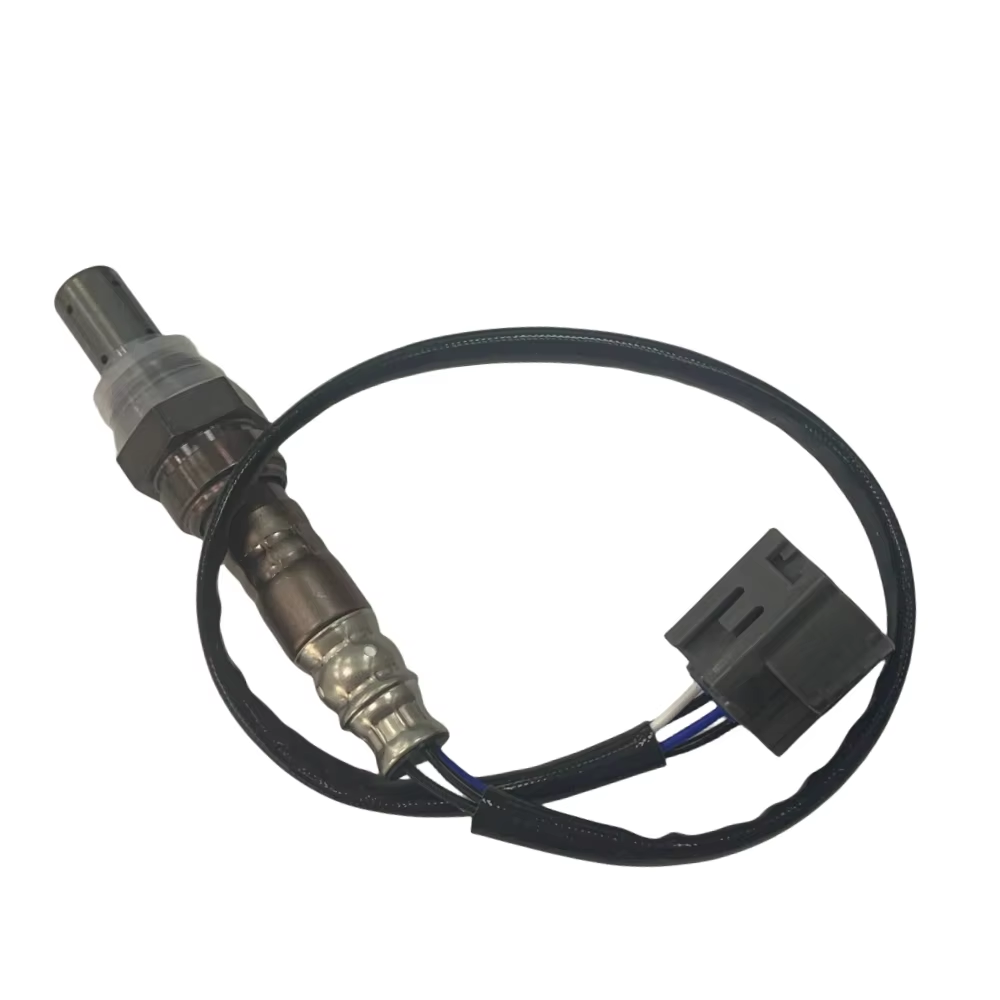
A failing oxygen sensor rarely triggers an immediate breakdown, yet it quietly pushes exhaust emission upward long before the check-engine lamp appears. The link between O2 sensor emissions control and catalyst health explains why a small signal drift can cascade into a costly failure. Mounted in the exhaust manifold, this probe reports the leftover oxygen in burnt gases so the engine control unit can keep combustion clean. When the element ages or fouls with oil ash and silicone, the signal drifts and the whole emission control strategy starts to slip toward a richer, dirtier state.
How a Failed Oxygen Sensor Forces the Engine into a Rich State
The Closed-Loop Fuel Control the Sensor Supports
The oxygen sensor lies at the heart of closed-loop fuel control. It measures the air-fuel ratio by comparing oxygen on each side of its zirconia or wideband cell, then outputs a voltage or current the ECU reads several times per second. A healthy reading swings the injector pulse between rich and lean, holding the mixture near the stoichiometric point where the three-way catalyst operates with peak efficiency and converts HC, CO, and NOx at the same time. Narrowband units only signal rich or lean, while wideband probes quantify the exact deviation so the ECU trims fuel with finer resolution. Both need exhaust gas heat to reach the light-off point, after which the heater circuit holds the cell steady for consistent reporting and stable air-fuel ratio control.
Why a Stuck Reading Sends the ECU the Wrong Signal
When the oxygen sensor element becomes sluggish or coated with deposits, it can latch at a low voltage that the ECU interprets as a permanently lean mixture. The controller responds by lengthening injector duration, adding fuel to correct a problem that does not exist. This open-loop bias, often called positive fuel trim, keeps the engine running rich far beyond the narrow window the catalyst can clean, starving the chamber of the oxygen it needs for complete burning.
What Happens to Exhaust Emission When the Mixture Runs Rich
Rising HC and CO at the Tailpipe
A rich mixture leaves unburned fuel in the cylinder because there is too little oxygen to finish combustion. That surplus hydrocarbon and carbon monoxide escape through the exhaust gas stream and leave the tailpipe untreated. Independent bench data and roadside inspection programs show that a single biased oxygen sensor can lift HC and CO readings well above the thresholds set by Euro emission stages and UNECE Regulation No. 83, the framework behind modern type approval.
Why the Catalytic Converter Overheats and Fails
The catalytic converter is built to oxidize HC and CO, but it has a limited thermal budget. Excess fuel that slips through the chamber burns inside the catalytic converter itself, spiking the substrate temperature past 900 °C. Sustained overheating melts the ceramic honeycomb, raises backpressure, and permanently reduces conversion efficiency. A failed oxygen sensor that is left unaddressed therefore threatens the converter and lets NOx and particulates escape even after the original fault is finally repaired.
A Real Emissions-Test Failure and Its Resolution
Background — A High-Mileage Sedan at the Inspection Lane
A fleet operator brought a 180,000 km sedan for its annual inspection. The vehicle idled smoothly and returned strong fuel economy on the road, yet it failed the tailpipe test with CO three times the legal limit. A scan tool showed a slow-response fault on the upstream oxygen sensor and a steady positive long-term fuel trim near 18 percent. The exhaust smell was sharp and sweet, a classic rich signature that the driver had learned to ignore.
Solution and Measured Effect After Replacement
The workshop fitted a direct-replacement oxygen sensor matched to the engine platform and reset the adaptive fuel trim with a compliant scan tool. After a short drive cycle, HC dropped by roughly 60 percent and CO fell back inside the legal band. The catalytic converter survived because the owner acted before sustained overheating began. The case shows how quickly a single faulty part cascades into a failed inspection and avoidable catalyst damage that costs far more than the probe.
How to Inspect, Replace, and Maintain the Sensor for Clean Exhaust
Buy and Inspect Tips for a Reliable Sensor
Before fitting the oxygen sensor, verify the harness connector, thread length, and body style against the vehicle specification. Inspect the wiring for oil contamination, a melted loom, and corrosion at the waterproof seal. A quality unit should satisfy ISO 15037 test methods for electrical and environmental endurance. Avoid mixing connector styles, and confirm the heater circuit draws the rated current so the probe reaches operating temperature fast and reports an accurate air-fuel ratio.
Maintenance Habits That Protect the Catalyst
Change engine oil on schedule, fix any misfire promptly, and keep the air filter clean so the air-fuel ratio stays balanced. Address a pending OBD code before the next long trip, because a rich condition tolerated for months is what kills the catalyst. Follow the maintenance interval in the service manual rather than waiting for a breakdown. Regular inspection at the recommended mileage keeps exhaust emission low and the converter alive, protecting both compliance and running cost. Also keep the cooling system healthy, since engine overheating worsens combustion and loads the catalyst. A clean throttle body and sound spark plugs help the mixture burn fully, leaving less raw hydrocarbon for the converter to handle. Small, regular checks beat a single large repair after the emission warning finally appears.
A weak oxygen sensor is the hidden root of many emission failures, not a worn catalytic converter or bad fuel. Replacing the probe early restores closed-loop control, drops HC and CO, and spares the catalyst from overheating. Treat the signal as a leading indicator: when it drifts, exhaust emission climbs and inspection risk follows. Proactive maintenance protects both regulatory compliance and the converter's service life, avoiding a far larger repair bill.
Frequently Asked Questions
Question
What makes a failed sensor raise tailpipe emission?
Answer: A failed probe stops reporting true air-fuel ratio, so the ECU keeps adding fuel and runs the engine rich. Unburned hydrocarbon and carbon monoxide then leave the tailpipe untreated, pushing readings above legal thresholds. The fault often stays hidden because idle feels normal. Catching the drift early prevents a failed inspection and limits damage to the downstream catalyst and exhaust components.
Question
Why does a rich mixture overheat the catalytic converter?
Answer: Excess fuel that escapes combustion burns inside the catalyst instead of the chamber, releasing heat directly on the ceramic substrate. Temperatures can exceed 900 °C, melting the honeycomb and raising backpressure. Once the structure is damaged, conversion efficiency drops and more pollutant leaves the tailpipe. Prompt correction of the fuel trim protects the converter and keeps the emission control system within designed thermal limits.
Question
How can a weak probe be detected before inspection?
Answer: A sluggish oxygen sensor shows a slow voltage swing during a live data stream and stores a slow-response fault code. Scan tools reveal positive long-term fuel trim, while a sharp exhaust smell hints at a rich bias. Road testing with the harness warm exposes the drift before the annual test. Early detection saves the catalytic converter and avoids the cost and downtime of a failed emission check.
Question
Can a damaged catalytic converter be cleaned instead of replaced?
Answer: Light surface contamination from a brief rich episode can sometimes recover after the root fault is fixed and the engine runs several clean drive cycles. However, melted substrate or cracked housing cannot be restored by additives or solvents. Continuing to drive with a failed converter increases tailpipe pollutant and risks further engine stress. A proper diagnosis with temperature and backpressure checks decides whether replacement is the only safe path.
Question
Which maintenance step most protects the emission control system?
Answer: Replacing engine oil on time and fixing any misfire without delay keeps the air-fuel ratio balanced and prevents raw fuel from reaching the catalyst. A clean air filter and prompt OBD code repair stop a rich bias before it overheats the converter. Following the service manual interval, rather than waiting for failure, is what preserves tailpipe compliance. Routine inspection at the recommended mileage remains the most reliable defense.