 EN
EN

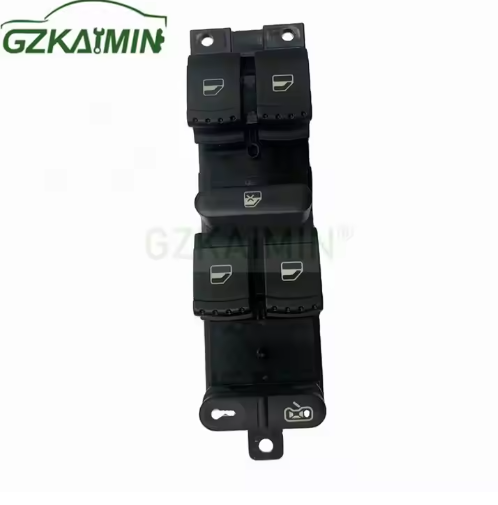
How Vehicle Platform and Brand Architecture Affect Window Switch Compatibility
OEM Electrical Signaling: Why Toyota and Honda Demand Exact Voltage/Resistance Profiles
Both Toyota and Honda still use old school analog signaling for their window switches, and getting the right voltage and resistance is super important. Even tiny differences, like just half a volt off, can mess things up big time with error messages or total motor failure. Take the Honda Accord models from 2018 through 2022 for instance they run on a 12V pulse width modulated system that needs resistance values pretty much spot on within plus or minus 5% of what the factory specs say. When aftermarket parts don't meet those numbers, people end up dealing with windows that work sometimes or stop working altogether. Why do automakers stick to such tight requirements? Because there are safety features built into these systems that detect obstacles based on current readings, so when something gets in the way, the windows know to roll back out automatically.
Ford, GM, and European Brands: CAN Bus, LIN Bus, and Coding Dependencies for Modern Window Switches
Ford, General Motors, and European automakers, including Volkswagen and BMW, use digital communication networks (CAN and LIN buses) for window control. Unlike analog systems, these require switches to transmit authenticated, protocol-compliant messages recognized by the Body Control Module (BCM).
| Brand | Network Protocol | Key Dependency | Programming Requirement |
|---|---|---|---|
| Ford | LIN Bus | Message authentication | VIN-specific coding |
| GM | CAN Bus | Checksum validation | Dealer-level software |
| Volkswagen | CAN/LIN Hybrid | Signal encryption | ODIS diagnostic tool |
A 2022 Ford F-150 switch won't function without correct LIN message formatting, while BMW's iDrive integration requires component coding to avoid BCM communication errors. With 73% of installation failures traced to coding mismatches (Automotive Electronics Journal, 2023), compatibility now hinges on software alignment not just physical fit.
Model-Year Transitions and Their Impact on Window Switch Replacement
2015-2019 vs. 2020+ Platforms: Infotainment Integration, Harness Redesigns, and Pinout Variability
After 2020, car manufacturers started connecting window switches much closer to both the infotainment system and body control module, moving away from those old standalone 12 volt analog controls we used to see. According to what industry experts are finding, there's about a 30 percent jump in wiring complexity for vehicle harnesses made after this time period because of all these extra safety sensors and additional data lines being added. The connector designs themselves have changed quite a bit too. Take Ford models as an example recent ones now come with 8 pin connectors instead of the older 6 pin versions. This means mechanics need to double check several things before replacing anything including proper voltage levels, resistance within plus or minus 5 percent tolerance range, and making sure they match the correct pin configuration diagram for each specific model year.
Real-World Example: 2017 Subaru Outback Driver-Side Window Switch — Ground Loops and Pinout Mismatches Explained
There was this real world example back in 2017 with a Subaru Outback where small changes in the wiring connections led to big problems. Some aftermarket switches had their ground and power pins swapped around, which caused extra current draw running through the system at about 0.8 amps instead of the factory spec of 0.3 amps. This created those annoying ground loop issues we all dread, making wires overheat and completely knocking out the automatic window feature. Mechanics eventually figured it out by checking through official service manuals that clearly stated pin number 3 needed to be connected to ground specifically. What this shows is that getting parts to work properly isn't just about matching shapes or sizes. Real compatibility needs to match up on several fronts including how connectors are oriented, what kind of electrical load they handle, and even those special communication signals between components like Subaru's particular 125 kilohertz pulse pattern requirement for proper operation.
The Full Power Window Electrical Ecosystem: Ensuring Switch Compatibility Beyond Plug-and-Play
Interplay Between Window Switches, Motors, Fuses, and Body Control Modules (BCMs)
A functional power window system depends on seamless coordination among four interdependent components:
- Window switches, acting as user-command interfaces, transmit signals calibrated to the vehicle's electrical architecture;
- Window motors, which respond only to validated voltage levels or digital commands;
- Fuses and relays, protecting against overcurrent events triggered by mismatched resistance or coding errors;
- Body Control Modules (BCMs), serving as central arbiters that authenticate signals, manage safety logic (e.g., pinch detection), and coordinate with other modules like door modules or infotainment units.
Disruption at any layer whether an unprogrammed switch, degraded fuse contact, or outdated BCM firmware can cascade into erratic behavior or total system disablement.
Practical Selection Guide: How to Verify Genuine Window Switch Compatibility Before Purchase
Follow this systematic approach to confirm compatibility before purchase:
- Match vehicle-specific identifiers: Cross-reference year, make, model, trim level, and production date — mid-year changes often alter harnesses or BCM firmware.
- Validate electrical and protocol specs: Confirm voltage (typically 12V DC), resistance tolerance (±5% for analog systems), and network type (CAN/LIN) using OEM service documentation not just part numbers.
- Inspect physical interface details: Compare connector type, pin count, orientation, and terminal layout against factory diagrams; mismatched pins risk ground loops or open circuits.
- Confirm BCM integration requirements: Determine whether programming is needed many post-2018 vehicles require OBD-II tools (e.g., FORScan, Tech2, or ODIS) to sync new switches with security and safety protocols.
- Test holistically after installation: Operate all windows including auto-up/down and anti-pinch functions and monitor for warning lights or BCM fault codes, as latent circuit issues may not surface immediately.
FAQ
1. Why is voltage/resistance accuracy critical for Toyota and Honda window switches?
Due to analog signaling systems, precision in voltage/resistance is vital for safety features such as obstacle detection, which are designed to prevent motor failure.
2. How do Ford and GM window switches differ in communication protocols?
Ford uses LIN Bus requiring message authentication and VIN-specific coding, while GM relies on CAN Bus with checksum validation and dealer-level software for programming.
3. How have model-year transitions affected switch replacements?
Post-2020 vehicles have seen increased wiring complexity, infotainment integration, and pinout changes, necessitating thorough checks for compatibility and proper installation.
4. What components must coordinate in the power window electrical ecosystem?
The system depends on interaction between window switches, motors, fuses, and Body Control Modules (BCMs) for consistent operation and safety logic management.
5. How can I ensure compatibility before purchasing a replacement switch?
Investigate vehicle-specific identifiers, electrical specs, physical interface details, BCM integration needs, and perform holistic testing post-installation.
Table of Contents
- How Vehicle Platform and Brand Architecture Affect Window Switch Compatibility
- Model-Year Transitions and Their Impact on Window Switch Replacement
- The Full Power Window Electrical Ecosystem: Ensuring Switch Compatibility Beyond Plug-and-Play
- Practical Selection Guide: How to Verify Genuine Window Switch Compatibility Before Purchase
- FAQ