 EN
EN

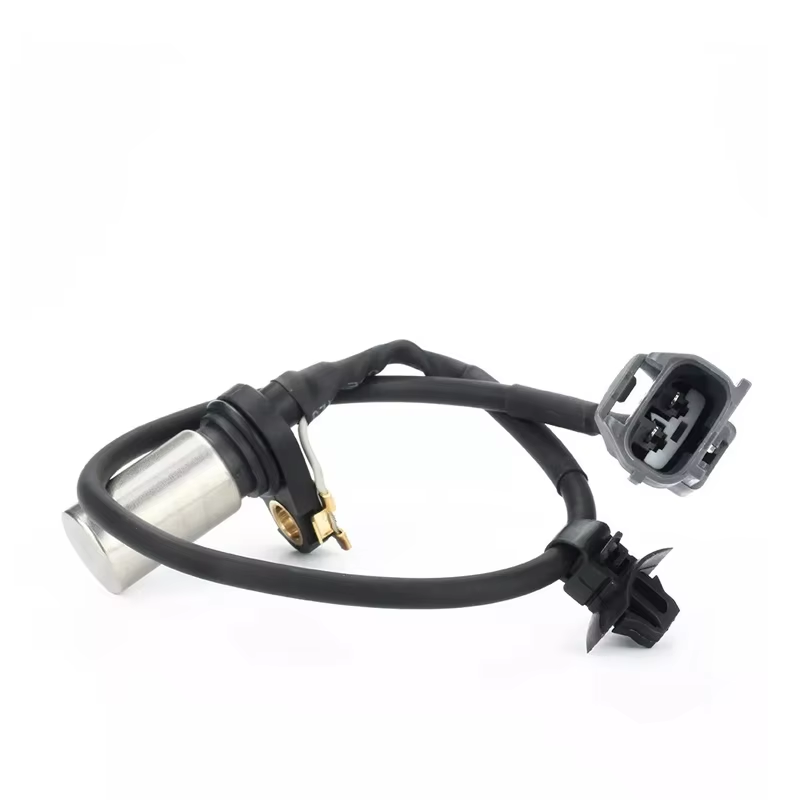
How Crankshaft Sensors Work: Hall Effect vs. Inductive Technologies
Hall Effect Sensors: Digital Precision, Immunity to EMI, and OEM Adoption Trends
Hall effect crankshaft sensors work by creating clean digital square wave signals when the trigger wheel teeth move through a magnetic field, causing voltage changes. These sensors have a big advantage over analog options because they stay consistent throughout all RPM ranges, giving angular accuracy within about half a degree no matter how fast the engine is running. That kind of reliability matters a lot for things like direct injection timing, start stop systems, and making sure turbochargers sync properly. Another plus is their solid state construction which makes them resistant to electromagnetic interference from stuff like ignition coils or alternators, so there's less chance of signal problems in those crowded engine compartments. Most models can handle temperatures ranging from minus 40 degrees Celsius up to 150 degrees, meeting both heat tolerance and precision requirements for today's powertrains. According to data from SAE International last year, nearly 8 out of 10 new turbocharged engines are specifying Hall effect tech these days, mainly because emissions regulations keep getting stricter and manufacturers need timing accuracy better than one degree.
Inductive Sensors: Analog Output, Cost Efficiency, and Limitations in High-RPM or Noisy Environments
The inductive type of crankshaft sensor, also known as variable reluctance, works through electromagnetic induction principles. Basically, there's a permanent magnet and coil setup inside these sensors that creates an AC voltage when the metal teeth on the crankshaft pass by and disrupt the magnetic field. As engine speed goes up, the waveform produced gets bigger and faster too. But problems start showing at low speeds under 200 RPM where the signal becomes really weak, and then again above around 6,000 RPM where the signal gets all smeared out and hard to read. These sensors output raw analog signals without any internal circuitry to boost or clean them up, making them very sensitive to electromagnetic interference. That's especially bad near ignition components where timing can go off by more than 3 degrees according to SAE standards from last year. Despite being tough mechanical parts and relatively inexpensive, most manufacturers only use them in older vehicles, cheaper models, or special situations where precision isn't critical and electromagnetic noise isn't a big concern.
Critical Failure Symptoms and Engine System Impacts of a Faulty Crankshaft Sensor
From Stalling to No-Start: Diagnosing Timing Disruption Through Real-World Driveability Patterns
When a crankshaft sensor starts to fail, it throws off the ECU's job of syncing fuel injection with spark timing, which leads to noticeable driving issues that get worse over time. Early warning signs usually include the engine stalling randomly while accelerating or running roughly at idle. If the sensor completely loses its signal, most vehicles won't start at all. What we're seeing here is basically timing gone haywire. Field tests actually indicate that misfires go up around 38 percent during hot weather cycles because delayed signals mess with position tracking according to Innova research from 2025. Most mechanics will check the crankshaft sensor first when they see unexpected RPM fluctuations, power loss under pressure, or an unstable idle. This becomes especially important after cars have been through damp conditions, constant vibrations, or placed near electromagnetic interference points along the wiring system.
P0335 Code Analysis: Correlation Between Signal Loss, Ignition Timing Deviation (3.2°), and Fuel Trim Instability
The P0335 code points to problems with the crankshaft position sensor circuit. Common causes include damaged wiring that's either open or shorted out, too much space between components (excessive air gap), or when the sensor itself fails internally. If there are signal gaps longer than 200 milliseconds, the ignition timing gets thrown off by more than 3.2 degrees, which is outside what most car manufacturers consider acceptable for today's direct injection engines. This creates a chain reaction of control problems where fuel trims can jump around by plus or minus 15 percent as the computer tries to compensate based on bad piston position readings. Mechanics see this pattern quite often actually - about 72% of confirmed P0335 cases also show those annoying lean/rich fluctuations along with timing errors, something that wears down catalytic converters faster than normal. When these issues persist long enough, vehicles often go into limp mode, highlighting just how critical this particular sensor is for keeping everything running smoothly across the entire engine system according to recent industry reports from Foxwell in 2025.
Reliability Requirements: Accuracy, Environmental Resilience, and Application-Specific Demands
Angular Accuracy Tolerance (±0.5°) as a Non-Negotiable for Direct-Injection and Turbocharged Engines
Getting angular accuracy right at around ±0.5 degrees is not just nice to have for direct injection and turbocharged engines anymore, it's absolutely essential. When timing goes off track past this point, things start going wrong fast. Combustion gets messed up, injectors misfire when cylinder pressure hits its peak, turbochargers go into compressor surge mode, and worst of all we get those dangerous pre-ignition events that can destroy an engine. The level of precision needed keeps ignition events aligned within tiny 0.1 millisecond windows even though combustion pressures often push past 2500 psi inside the cylinders. Testing by independent labs shows that engines running outside of ±0.7 degree tolerance lose about 17% horsepower and suffer accelerated wear on piston rings and cylinder bores. Most major car manufacturers now specify this kind of accuracy throughout the entire RPM range for any engine with forced induction, which makes sense given how crucial it is for both engine longevity and meeting increasingly strict emissions standards these days.
Withstanding Under-Hood Stressors: Vibration, Thermal Cycling (40°C to 150°C), and EMI in Proximal Mounting Zones
The crankshaft sensor faces some really tough operating conditions within car electronics systems. These components need strong materials and good protection against electromagnetic interference to function properly. According to industry standard SAE J2380, these sensors should handle impacts equivalent to about 30G of force without losing their signal quality, which basically means surviving rough terrain vibrations over time. When it comes to temperature extremes, crankshaft sensors operate from freezing engine starts at minus 40 degrees Celsius all the way up to hot spots near exhaust systems reaching around 150 degrees Celsius. The circuits inside are usually encased in silicone to prevent overheating when temperatures swing rapidly by more than 190 degrees per minute. Placement matters too since these sensors sit close to noisy electrical parts like alternators and ignition coils. That's why manufacturers build them with three layers of shielding to block out electromagnetic interference up to 200 volts per meter. Real world testing shows that sensors without proper shielding tend to fail about eight times quicker in hybrid cars, mainly because the regenerative braking system creates sudden bursts of electromagnetic noise that regular sensors can't handle.
Key endurance benchmarks:
| Stressor | Threshold | Failure Consequence |
|---|---|---|
| Vibration | 10–2000 Hz at 30G | Air gap fluctuation (>0.3mm) |
| Thermal Shock | 40°C – 150°C in <60 sec | Resin delamination |
| EMI Exposure | 200V/m field strength | Signal dropout (>3µs) |
Installation Best Practices and Configuration Tradeoffs for Optimal Crankshaft Sensor Performance
How well a crankshaft sensor lasts depends a lot on how it gets installed. Make sure to follow those manufacturer specs closely when setting the air gap between 0.5 to 1.5 mm and tightening bolts within 8 to 10 Newton meters. If bolts are too loose, vibrations will mess with readings over time. But go too tight and the sensor housing might bend or the target wheel could get misaligned, leading to all sorts of strange signals. When working with Hall-effect sensors specifically, keep power wires clear of ignition coils and alternators because electromagnetic interference really messes things up. Never skip sealing those connectors properly either. Moisture and temperature changes eat away at unprotected terminals pretty fast. Always check every inch of the wiring harness when replacing parts too. A surprising number of early failures come from damaged insulation or rusty connection points according to some real world data showing about 37% failure rate there. Once everything goes back together, test the sensor's performance with a scan tool to look at waveforms. Check if the signal stays strong and consistent across different engine speeds before putting everything back in place.
FAQ
What is the main advantage of Hall effect crankshaft sensors over inductive sensors?
Hall effect crankshaft sensors are preferred for their digital precision and consistent performance across all RPM ranges, which is crucial for modern engines where timing accuracy is essential.
Why are inductive sensors less reliable at high and low RPMs?
Inductive sensors produce weaker signals at low RPMs and become less defined at high RPMs, making them less accurate for timing-critical applications compared to Hall effect sensors.
What are common symptoms of a failing crankshaft sensor?
Common symptoms include engine stalling, rough idling, and no-start conditions, often due to the sensor disrupting proper fuel injection and spark timing.
How does the P0335 code relate to crankshaft sensor issues?
The P0335 code indicates a malfunction in the crankshaft position sensor circuit, which can lead to timing deviations and unstable fuel trims, affecting engine performance.
Table of Contents
- How Crankshaft Sensors Work: Hall Effect vs. Inductive Technologies
- Critical Failure Symptoms and Engine System Impacts of a Faulty Crankshaft Sensor
- Reliability Requirements: Accuracy, Environmental Resilience, and Application-Specific Demands
- Installation Best Practices and Configuration Tradeoffs for Optimal Crankshaft Sensor Performance
- FAQ