 EN

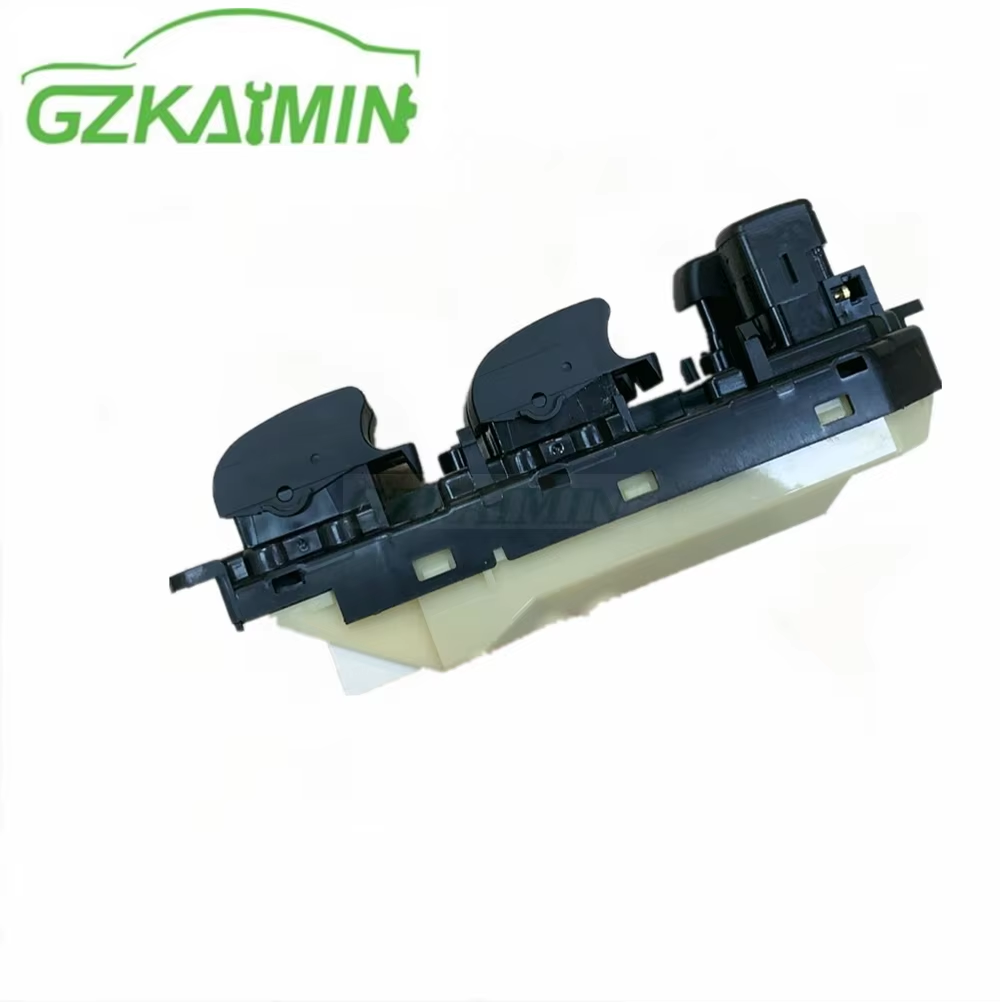
A workshop in Guangzhou received a 2014 sedan whose driver-side window would not move. The owner reported that pressing the control did nothing, yet the motor still hummed when tested directly. Inspection showed the master unit had an open circuit on one contact. Fitting a new window switch restored normal operation, and the customer avoided a costlier regulator repair. This case shows why the control deserves early attention during routine service.
Common Failure Modes of the Master Window Switch
Intermittent Contact and Dead Spots
The master control carries the driver's commands for every door in the cabin. Over years of daily use, the conductive paths inside develop intermittent contact that comes and goes without warning. Tiny oxidation layers form on the copper contacts, creating dead spots where a single press produces no response at all. A worn rubber membrane under the button loses its spring tension, so the plunger fails to seat fully. These faults appear as windows that move only after several presses or only from certain angles. The window switch in such a car still looks normal from outside, which hides the problem until the glass stops completely and leaves the occupant stranded.
Burnt Contacts from Electrical Arcing
High current passes through the master window switch every time a pane lifts against its rubber seal. When the contacts separate under load, an electrical arc jumps the gap and burns the metal beneath. Repeated arcing leaves a black, pitted surface that resists current flow and heats the local area. The plastic housing near the contact softens, and the switch may weld shut or fail open without notice. This failure mode explains why a window suddenly stops at mid-travel. Quality designs use silver alloy contacts and stronger return springs to resist arc damage and extend the service life of the unit under repeated load.
Water Ingress and Rubber Wear
Door panels face rain, car washes, and constant condensation. A cracked rubber boot or a failed door seal lets moisture reach the internal contacts. Water ingress corrodes the terminals and can short the circuit to ground. The soft rubber gasket that keeps each button sealed also hardens with age and UV light, losing its barrier. Once the seal fails, corrosion spreads across the contact plate quickly. Regular checks of the door weatherstrip and the boot help prevent this failure before it strands a window halfway down during a storm or a cold night on the road.
Diagnosing a Failing Power Window Switch
Testing the Switch Matrix with a Multimeter
A power window switch is not a single on-off part. It forms a matrix that routes battery voltage to the correct motor lead for each door. Set a multimeter to continuity or low-voltage mode and probe the terminals while pressing each button in turn. A healthy part shows a clean, stable path; a failing one reads open or flickers between values. Compare the readings against the vehicle service manual for the exact pin layout. This test separates a dead switch from a bad motor or a broken wire, saving unnecessary parts swaps and giving a clear fault location for the technician.
Reading Contact Logic and Fault Codes
Modern body control modules log switch faults automatically. A scan tool may show a code for a specific door or a stuck-up or stuck-down state. The contact logic is simple: each button position closes a unique pair of terminals in the grid. When the module sees no change for a pressed button, it records a diagnostic trouble code. Reading these codes points directly at the faulty component rather than the window regulator switch or the motor. Combine the stored code with the multimeter check for a confident, low-cost diagnosis before ordering any replacement part from the catalogue.
Safety Risks, Inspection, and Maintenance
Stuck Windows and the Risk of Trapped Glass
A failed control can leave the glass stuck open without warning. Rain enters the cabin, soaking the seats and the door electronics below. In traffic or at a drive-through, an open window is a real security risk for belongings left inside. A pane stuck halfway also risks trapping fingers, pets, or loose objects near the frame. The danger grows in cold weather when ice forms around the seal and the glass cannot close. Treat any sluggish or hesitant movement as an early warning sign. Prompt repair of the part protects both the car and its occupants from avoidable damage and exposure.
Buying and Maintaining a Door Window Switch
Choose a door window switch built to match the original connector shape and current rating. Check the contact material, the rubber seal, and the housing fit against the door panel. Suppliers operating under IATF 16949 quality management produce more consistent electrical parts. SAE guidelines cover automotive electrical connector performance, and an IP-rated seal built to IEC 60529 resists water ingress in wet climates. For upkeep, keep doors clean, avoid leaning on the armrest, and test each button monthly. Replace a suspect unit before it strands the window, and inspect the weatherstrip whenever the door is opened for service.
The window switch is a small part with a large job. Intermittent contact, burnt contacts, water ingress, and worn rubber all lead to the same result: a window that will not move when needed. Early diagnosis with a multimeter and a scan tool prevents bigger repairs. Good buying choices and simple upkeep keep the control reliable for years. A healthy switch means a window that always responds, rain or shine.
Frequently Asked Questions
Question
What are the most common signs of a failing control?
Answer: Common signs include a window that moves only after several presses, a dead button on one door, and a pane that stops at mid-travel. A humming motor with no glass movement points to the window switch rather than the regulator. Intermittent response, especially in humid weather, suggests oxidation on the contacts. A scan tool may log a door-specific fault code. Testing with a multimeter confirms the fault before any part is ordered or replaced by a technician.
Question
Why does water ingress damage the switch contacts?
Answer: Moisture reaches the contacts through a cracked rubber boot or a failed door seal. Water conducts small currents and triggers corrosion on the copper and silver surfaces. Corrosion builds resistance, then open circuits, so the button stops working. An IP-rated seal built to IEC 60529 keeps moisture out in wet climates. Replacing the weatherstrip and the boot early prevents the damage. Keeping the door clean also reduces the path that water takes toward the internal contacts over time.
Question
How can a faulty switch be tested at home?
Answer: A multimeter set to continuity mode probes the terminals while each button is pressed. A healthy control shows a stable path; a bad one reads open or flickers. Compare the pin layout with the vehicle service manual. A scan tool adds confirmation by showing a stored door fault code. This approach separates a dead switch from a failed motor or a broken wire, avoiding unnecessary parts and giving a clear repair direction before a workshop visit.
Question
Can a burnt contact be repaired instead of replaced?
Answer: Cleaning pitted contacts with fine paper may restore function for a short time, but the damage returns under load. Arcing leaves a hardened, resistive surface that worsens with heat and current. A welded or burnt contact also risks overheating the housing and nearby wiring. Replacement with a unit built to the correct current rating is the safer path. Quality parts use silver alloy contacts that resist arc damage and give a longer, more reliable service life in daily use.
Question
Which standard helps confirm switch quality for wet climates?
Answer: An IP rating built to IEC 60529 confirms resistance to water ingress for the sealed control. Suppliers operating under IATF 16949 quality management produce more consistent electrical parts, while SAE guidelines cover connector performance. Choose a unit with a sound rubber seal and the original connector shape. Matching the current rating prevents overheating. Inspect the weatherstrip whenever the door is opened, and replace a suspect control before a storm leaves the glass stuck open and exposed.