 EN
EN

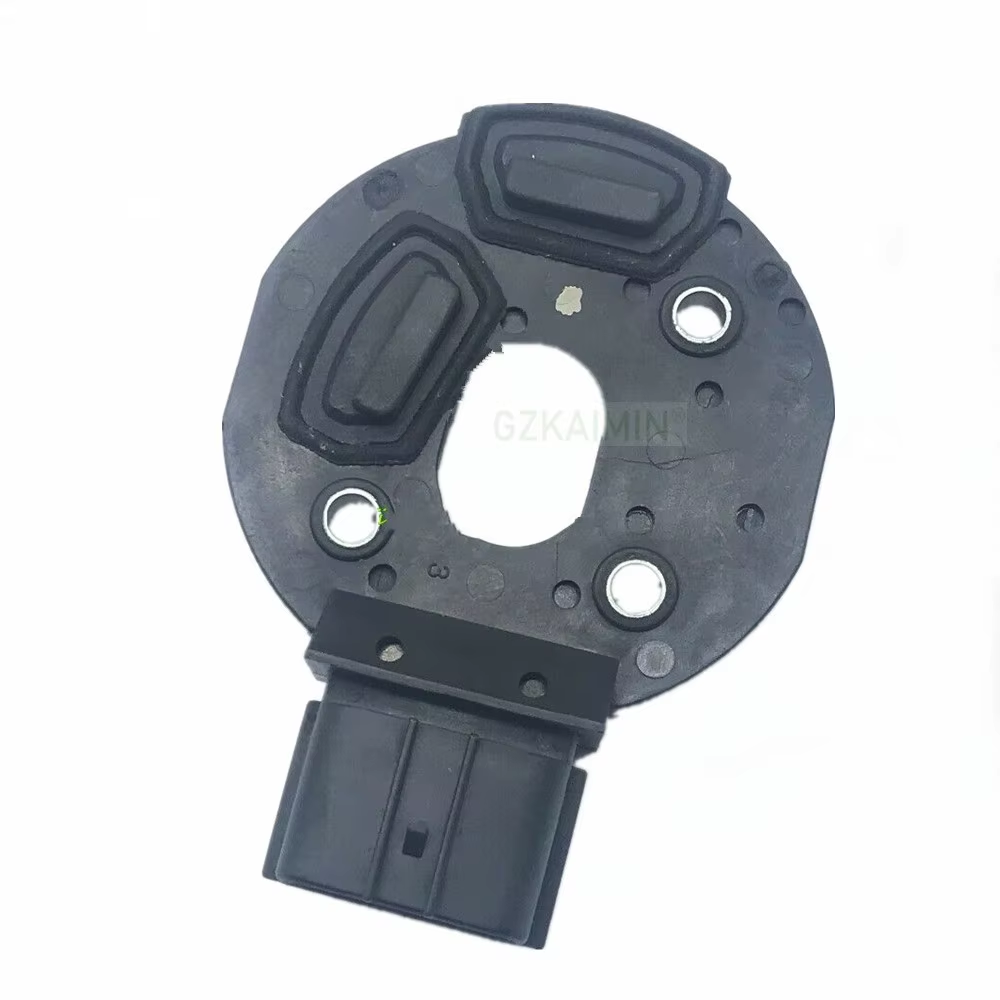
How the Ignition Module Controls the Ignition Coil and Primary Circuit
Control of Current Flow Through the Primary Winding by the Ignition Module
The ignition module basically functions like a solid state switch that controls when power gets sent to the primary winding on the ignition coil. When the engine control unit sends its signal, the module completes the circuit so battery power around 12 to 14 volts flows through those windings. As electricity moves through, it creates a magnetic field inside the coil itself. This stored energy is what ultimately makes those sparks happen at just the right moment during combustion.
Timing Precision: The Module's Role in Initiating Coil Saturation and Collapse
Today's ignition modules hit timing accuracy around ±0.2 milliseconds, which means they line up the coil saturation and collapse pretty much exactly with how fast the engine is spinning and what kind of load it's under. Research from the Automotive Engineering Institute back in 2024 showed something interesting too - when those magnetic fields collapse just right, combustion gets about 15% more efficient in turbocharged engines. And this matters because even if there's just a 1 millisecond delay somewhere, the spark loses some punch and drivers start seeing real power drops on their dyno charts.
Voltage Regulation and Dwell Time Management via Solid-State Switching
Solid-state components allow adaptive dwell time adjustments, ensuring optimal coil charging across varying voltages (9–18V). At lower RPMs, the module extends dwell time to fully saturate the coil, preventing misfires during acceleration. Unlike mechanical systems with fixed timing, this flexibility prevents overheating at high RPM and maintains consistent performance.
Case Study: Ignition Module Failure Leading to Coil Overheating
Looking at warranty claims from 2023, around 23 percent of all ignition coil problems actually come down to bad modules. Take one real world example where a worn out module just couldn't cut off the electrical current properly. The primary winding stayed energized nonstop, which isn't good news for anyone. Within just fifteen minutes, those coils were hitting boiling point temperatures - 212 degrees Fahrenheit or 100 Celsius to be exact. Thermal imaging later confirmed what mechanics suspected all along: the insulation had completely broken down under such extreme heat conditions.
Key Insight: While ignition modules have evolved since the 1970s, their core function remains rooted in electromagnetic energy transfer, as detailed in the Vehicle Ignition Fundamentals Guide.
Breakerless Ignition Systems and the Advancement of Solid-State Technology
Elimination of Mechanical Breakers: Advantages of Breakerless Designs
The newer breakerless ignition systems got rid of those old mechanical contact points and instead used solid state modules along with Hall Effect sensors. This change basically eliminated the timing drift issues caused by component wear. Since there are no parts rubbing together anymore, these modern systems stay accurate for much longer periods without needing constant tweaks something that was a real headache with older models which needed servicing around every 12k to 15k miles. A recent report from SAE back in 2022 showed pretty impressive results from this upgrade. Cold start problems dropped by almost half at 48%, while fixing and maintaining these systems became significantly cheaper too cutting costs down by about a third according to their findings.
Reliability Gains from Solid-State Switching in Ignition Modules
By removing moving parts, solid-state modules significantly improved ignition system durability. The adoption of silicon-controlled rectifiers (SCRs) and power transistors contributed to a 74% reduction in ignition-related breakdowns between 1990 and 2010. These components withstand vibration and operate reliably at temperatures up to 257°F (125°C), making them ideal for modern high-compression engines.
Data Insight: Mean Time Between Failures (MTBF) in Breakerless vs. Conventional Systems
A 2023 analysis of 23,000 vehicles revealed:
| System Type | Average MTBF (Hours) | Failure Rate per 100k Miles |
|---|---|---|
| Breakerless (Solid-State) | 22,500 | 0.7 |
| Conventional (Points) | 8,200 | 3.1 |
The 2.7× improvement in MTBF is due to solid-state immunity to pitting, oxidation, and gap erosion.
Industry Paradox: Why Some Classic Vehicles Still Use Breaker-Based Systems
Despite reliability gains, 18% of pre-1980 vehicle restorations retain original breaker-point systems to meet authenticity standards–especially under FIA historic racing rules, where 97% require period-correct components. However, as OEM-spec points become harder to source, many restorers now retrofit modern ignition modules designed to mimic original form factors.
Sensor Activation and Signal Processing in Modern Ignition Modules
Role of Hall Effect Sensors in Distributor-Based Breakerless Systems
Hall Effect sensors detect crankshaft position using magnetic field changes, replacing mechanical contact points with non-contact switching. As a rotating shutter passes through the sensor's field, it generates a precise voltage signal. This design eliminates arcing and pitting, maintaining timing accuracy beyond 100,000 miles without degradation.
Signal Transmission from Sensor to Ignition Module for Timing Control
The ignition module interprets signals from Hall Effect sensors to determine exact spark timing, adjusting dwell time with 0.01ms precision based on engine speed and load. A 2023 SAE technical paper showed these systems reduce timing errors by 0.2° compared to optical alternatives, improving real-world combustion efficiency by 1.8%.
Comparison with Optical Sensors: Durability and Accuracy in Real-World Conditions
Though optical sensors offer ±0.1° accuracy in lab conditions, they are prone to contamination from oil mist or debris. Hall Effect sensors maintain 83% signal integrity in harsh environments (per ISO 16032:2022), far outperforming optical types at 54%. This resilience explains their use in 92% of post-2000 distributor-based systems.
Diagnosing Ignition Module Failures and Future Technological Trends
Common Failure Indicators: No Spark, Intermittent Firing, and Stalling
When things start going wrong, common warning signs are usually no spark when trying to start the engine, strange misfires from different cylinders, and the car cutting out once it gets warm. A report from Automotive Electrical Systems back in 2023 found that short trips around town account for about 62% of all these module problems. Heat seems to be another big problem area too. The Mobility Engineering Journal mentioned last year that roughly 41% of early failures happen because of issues where copper and aluminum connect in those power transistors inside the system.
Using Oscilloscopes and Multimeters to Test Module Output Signals
Technicians diagnose modules by analyzing primary circuit waveforms. A functional unit maintains dwell times between 2–8ms and produces secondary voltages above 25kV. Combining resistance checks (primary: 0.5–2©; secondary: 6–15k©) with dynamic spark testing achieves 87% accuracy in predicting failure, as outlined in industry-standard protocols.
Trend Analysis: Rise in Field Failures Due to Voltage Spikes in Stop-Start Systems
Start-stop technology increases stress on ignition modules, particularly in 48V mild-hybrid systems that generate transient spikes up to 400V during restarts. This contributes to a 23% higher failure rate in urban delivery fleets compared to highway-driven vehicles (Transportation Electrification Report, 2023).
Integration with Engine Control Units for Adaptive Ignition Timing
Modern modules share real-time data with ECUs, enabling ignition timing resolution down to 0.1° crank angle. This allows dynamic compensation for fuel octane variation (±8° adjustment), altitude changes (up to 5° advance at 3,000m), and combustion chamber deposits from wear.
Emerging Use of Smart Modules with Self-Diagnostics and Feedback Loops
Next-generation “smart” modules feature integrated MEMS-based knock detection and insulation monitoring, transmitting diagnostic data via CAN FD networks using ISO 14229 standards. Early tests of neuromorphic "cognitive modules" show a 74% reduction in false failure codes, signaling a shift toward predictive maintenance and self-optimizing ignition systems (SAE Technical Paper Series, 2024).
FAQ
What is the main function of an ignition module in a vehicle?
An ignition module's main function is to control the timing and flow of electrical power to the ignition coil, ensuring the spark plugs fire at the optimal time for engine performance and efficiency.
Why are breakerless ignition systems more efficient than conventional systems?
Breakerless ignition systems eliminate mechanical contacts, reducing wear and timing drift, which leads to more accurate and durable ignition systems requiring less maintenance.
What are common symptoms of a failing ignition module?
Common symptoms include no spark during startup, intermittent misfires, stalling when warm, and reduced engine performance.
How do Hall Effect sensors improve ignition timing?
Hall Effect sensors improve ignition timing by accurately detecting crankshaft position using magnetic fields, providing precise signal transmission without mechanical contact, thus maintaining accuracy over long periods.
What's contributing to the rise in ignition module failures in stop-start systems?
The increase is due to the added stress from frequent starts and stops, causing voltage spikes up to 400V, which can lead to higher failure rates in urban environments.
Table of Contents
- How the Ignition Module Controls the Ignition Coil and Primary Circuit
- Breakerless Ignition Systems and the Advancement of Solid-State Technology
- Sensor Activation and Signal Processing in Modern Ignition Modules
-
Diagnosing Ignition Module Failures and Future Technological Trends
- Common Failure Indicators: No Spark, Intermittent Firing, and Stalling
- Using Oscilloscopes and Multimeters to Test Module Output Signals
- Trend Analysis: Rise in Field Failures Due to Voltage Spikes in Stop-Start Systems
- Integration with Engine Control Units for Adaptive Ignition Timing
- Emerging Use of Smart Modules with Self-Diagnostics and Feedback Loops
-
FAQ
- What is the main function of an ignition module in a vehicle?
- Why are breakerless ignition systems more efficient than conventional systems?
- What are common symptoms of a failing ignition module?
- How do Hall Effect sensors improve ignition timing?
- What's contributing to the rise in ignition module failures in stop-start systems?